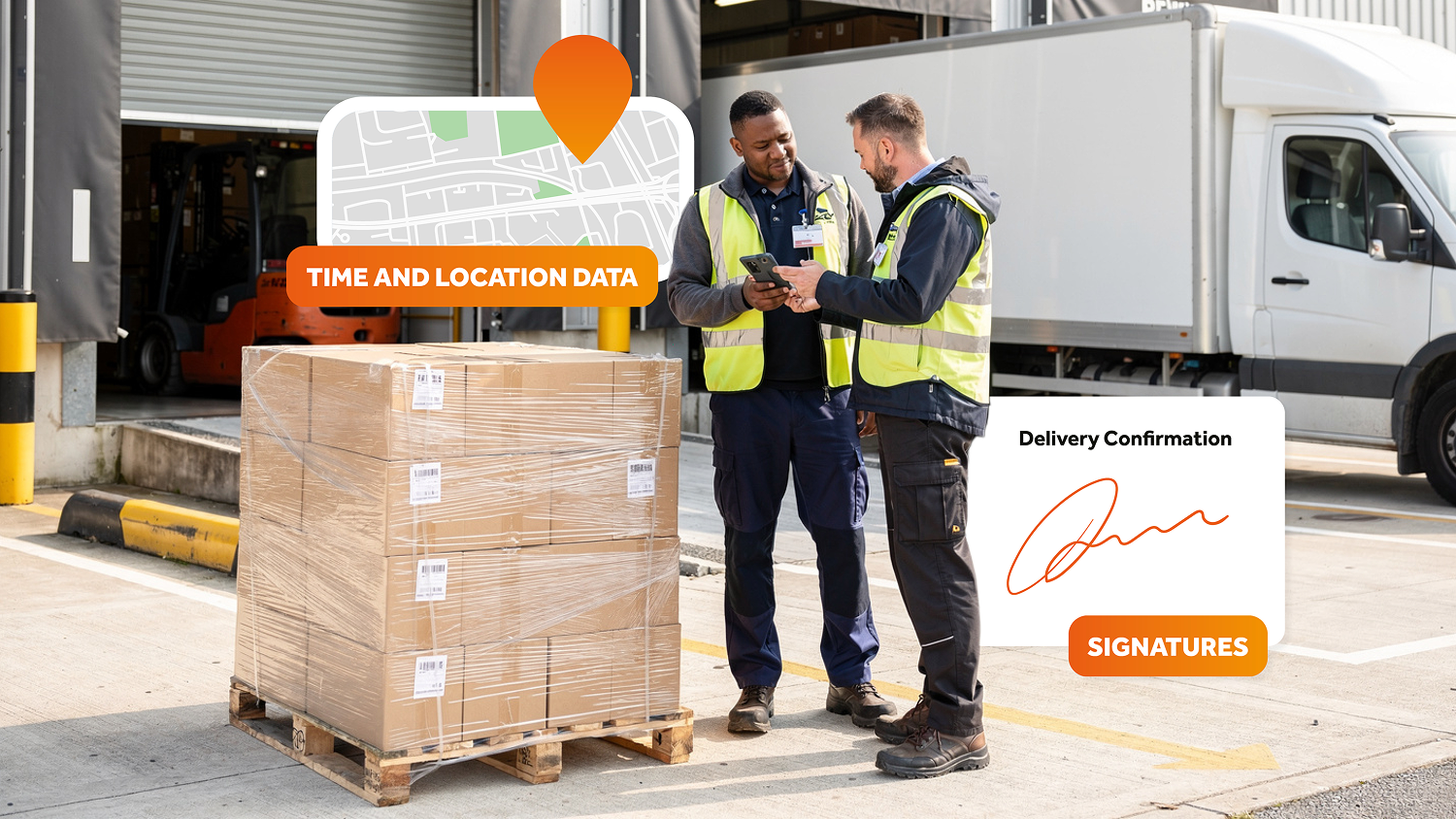
Missing delivery notes, disputed deliveries and waiting for paperwork to make its way back to the office all create unnecessary work for logistics teams.
The simplest way to answer “what is ePOD” is that it replaces paper trails with a digital record of what happened at the point of delivery. An ePOD system allows drivers to capture information such as signatures, photographs and delivery details, which can then be made available to the operations team in real time.
How does ePOD work?
Step 1 – The driver receives the delivery information
Delivery and collection information is made available through a mobile application, giving the driver the details and tasks they need for the day.
Step 2 – The driver follows the required workflow
At each delivery or collection, the driver completes the relevant steps. Depending on the operation, this could include scanning an item, taking a photograph, recording a quantity or obtaining a customer signature.
Step 3 – The delivery information is captured digitally
The completed delivery record can include the time, date and Global Positioning System (GPS) location alongside the other information captured by the driver.
Step 4 – The office gets visibility of the delivery
The information is returned to the central systems, providing the operations team with an up-to-date delivery status without waiting for paperwork to return to the depot.
Data Driven Logistics’ ePOD Flow can also automatically update estimated arrival times, provide customer notifications and generate digital Proof of Delivery (POD) documents.
Why does ePOD matter for logistics operations?
For logistics teams, proof of delivery is about more than confirming that a delivery has been completed. When delivery information is recorded on paper, operations teams may have to wait for paperwork to return before they can access the evidence they need. This can slow down dispute resolution, delay invoicing and make it harder to keep customers informed.
ePOD gives logistics teams access to delivery information as soon as it is captured. Digital signatures, photographs, timestamps, GPS data and delivery notes provide a clearer record of each delivery, while real-time information can help teams respond more quickly when something changes.
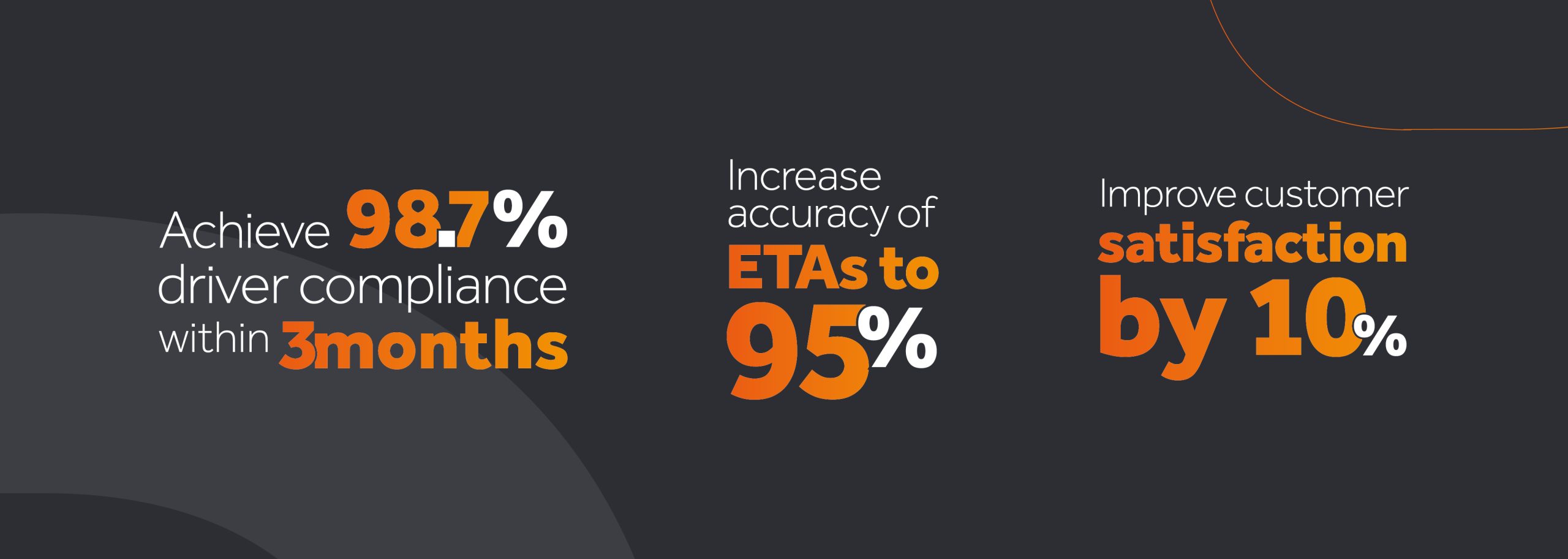
The potential benefits include:
- 98.7% driver compliance within 3 months
- ETA accuracy increased to 95%
- 10% improvement in customer satisfaction
What is the difference between ePOD and paper proof of delivery?
With a traditional paper POD, the customer signs a physical delivery note which must then be retained, returned and processed. If a customer raises a query before the paperwork reaches the office, the information needed to resolve it may not yet be readily available to the operations team.
With ePOD, the delivery evidence is captured electronically at the point of delivery and can be sent back to the office straight away.
This means less reliance on paperwork and a clearer audit trail for each delivery.
Electronic proof of delivery can also capture more than a signature. Photographs, timestamps, location information and delivery notes can give the operations team considerably more context when a discrepancy needs investigating.
What can an ePOD system capture?
The exact information depends on the system and the workflow configured for the delivery.
With DDL ePOD Flow, available data-capture options include:
- Electronic signatures
- Photographic proof
- Notes and data entry
- Time, date and GPS information
- Barcode scanning
- Quantity adjustments
- Delivery and collection information
- Customer and driver interactions
What are the benefits of ePOD for UK fleets?
Resolving delivery disputes with better evidence
A signature alone does not always tell the full story. Adding photographs, timestamps, location data and delivery notes creates a clearer record of what happened at the delivery point. If a customer later queries a delivery, the operations team has more information available to investigate it.
This additional evidence can also help businesses reduce delivery disputes and claims by giving teams a clearer audit trail.
Reduce delivery administration
Moving POD information into a digital workflow removes much of the manual handling associated with paper delivery notes. The office can access delivery information without waiting for paperwork to return with the driver, while digital records are easier to retrieve when a customer or colleague needs them.
Support faster invoice processing
Proof of delivery is often an important part of the invoicing process. Making the information available electronically means finance teams do not necessarily need to wait for physical PODs to return before progressing their work.
Give customers better delivery visibility
Customers increasingly expect to know what is happening with their delivery without having to call the transport office. Real-time delivery statuses, estimated arrival times and proactive delay notifications can give customers better visibility while reducing the need for manual updates from the operations team.
Why choose Data Driven Logistics for ePOD?
Not every delivery operation works in the same way. Rather than forcing businesses into a fixed process, Data Driven Logistics can configure ePOD Flow around the way your operation works.
Our in-house development team can adapt workflows, support integrations and develop functionality around specific customer requirements, giving logistics operators greater flexibility as their needs change.
Common Questions
Is ePOD a legal proof of delivery?
Yes, electronic proof of delivery can provide valid evidence that a delivery has taken place. In the UK, electronic signatures are admissible as evidence in legal proceedings, while photographs, timestamps and GPS location data can provide additional evidence of when and where a delivery was completed. The exact requirements may depend on the contract, customer and nature of the delivery.
What is ePOD used for?
When considering what is ePOD used for, its main purpose is to digitally record and manage deliveries, collections and returns. It can capture information such as customer signatures, photographs, timestamps, GPS locations, quantities and delivery notes, giving drivers and operations teams a clear digital record of each delivery.
What is the difference between POD and ePOD?
Proof of Delivery (POD) is evidence that goods have been delivered, traditionally recorded on a signed paper delivery note. Electronic Proof of Delivery (ePOD) captures this information digitally, allowing delivery evidence to be sent back to the office without waiting for paperwork to return with the driver.
Can ePOD help reduce delivery disputes?
ePOD can give operations teams more evidence to investigate delivery disputes. Alongside a customer signature, records can include photographs, delivery notes, timestamps and GPS information, creating a clearer audit trail of what happened at the delivery point.
Can ePOD integrate with existing logistics systems?
Yes. ePOD software can be integrated with other operational systems so delivery information can move between different parts of the business. Data Driven Logistics’ ePOD Flow supports bespoke integrations and can work alongside other DDL products, including DriveSafe and Sphere.
Can ePOD be tailored to different delivery options?
Yes. Delivery processes vary between businesses, customers and contracts, so ePOD workflows do not have to follow a fixed structure. Data Driven Logistics’ in-house development team can configure ePOD Flow around specific operational requirements, from the information drivers capture to these steps they follow for different customers or delivery types.
Our Expert Opinion
“The biggest benefit of ePOD isn’t simply removing paper. It’s having reliable information available when the business actually needs it. Every operation works differently, so we spend a lot of time understanding the customer’s process and configuring the system around that, rather than expecting them to change the way they work to fit the software.” [Name, Data Driven Logistics]
Explore ePOD Flow or speak to our team about your delivery operation.

Streamline Your Fleet Management with Telematics: A Comprehensive Tracking Solution
Efficiently managing a fleet has evolved from manual processes and whiteboard planning to a sophisticated telematics solution that revolutionises the way companies oversee their operations. […]
Read More →
Your Guide to the Direct Vision Standard 2024
Your Guide to the Direct Vision Standard 2024 As part of Vision Zero plans to eliminate road deaths and serious injuries by 2041, Transport for […]
Read More →