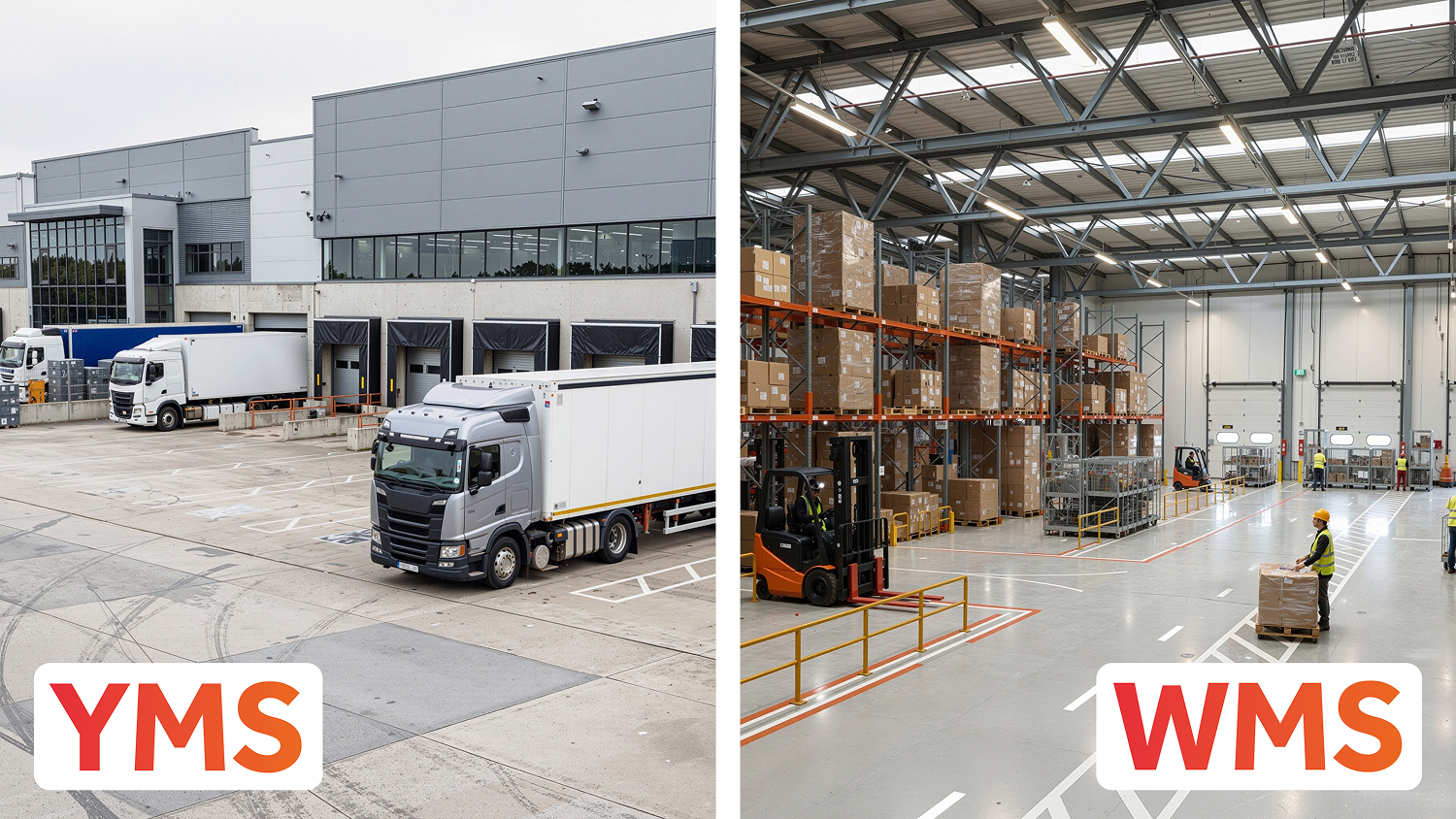
YMS vs WMS: What’s the Difference?
YMS vs WMS comes down to where each system operates. A Warehouse Management System (WMS) manages what happens inside the warehouse, including inventory, picking and fulfilment. A Yard Management System (YMS) manages the movement of vehicles, trailers and loads outside the warehouse, from arrival at the gate through to loading, unloading and departure. The two systems solve different problems and can work together to give logistics teams greater visibility across the site.
What is a Yard Management System (YMS)?
A Yard Management System (YMS) is software used to manage the movement of vehicles, trailers and loads from the moment they arrive on site to when they leave.
It gives logistics teams greater visibility of what is happening across the yard, including where vehicles and trailers are located, which loading bays are available and which movements need to happen next. This helps reduce reliance on manual processes and makes it easier to identify delays or bottlenecks.
Depending on the system, a YMS can also support gatehouse check-in, loading and unloading schedules, shunter movements, queue management and communication with drivers.
What is a Warehouse Management System (WMS)?
A Warehouse Management System (WMS) is software used to manage and monitor operations within a warehouse.
While a YMS focuses on the movement of vehicles and trailers outside the warehouse, a WMS focuses on the goods and processes inside it. This can include managing inventory, receiving goods and overseeing their movement through the warehouse.
The two systems therefore have different roles within a logistics operation. A WMS provides visibility and control inside the warehouse, while a YMS extends this visibility into the yard and the movement of vehicles and trailers around the site.
What is the difference between YMS and WMS?
While yard management systems and warehouse management systems both optimise supply chain logistics, they target distinct operational areas.
| Yard Management System | Warehouse Management System | |
|---|---|---|
| Primary focus | Vehicles, trailers and loads in the yard | Goods, inventory and warehouse processes |
| Where it operates | Gatehouse, yard and loading bays | Inside the warehouse |
| What it manages | Check-in, queues, bay allocation, shunter movements and loading schedules | Receiving, inventory, picking, packing and fulfilment |
| Main benefit | Reduces yard congestion and improves vehicle turnaround | Improves inventory control and warehouse efficiency |
| Typical Visibility | Vehicle locations, trailer status, bay availability and yard movements | Stock levels, locations, orders and fulfilment status |
| How they work together | Connects vehicle and yard activity with warehouse operations | Provides warehouse data that supports yard and loading activity |
YMS vs WMS: Do you need both systems?
In many logistics operations, yes. When looking at YMS vs WMS, the two systems manage different parts of the same operation, so they are complementary rather than competing systems.
A WMS manages goods and processes inside the warehouse. A YMS extends that visibility outside, helping teams manage the vehicles, trailers, loading bays and movements that connect transport with warehouse operations.
When integrated, the two systems can give logistics teams a clearer view of what is happening from vehicle arrival through to loading, unloading and departure.
How do you know if you need a Yard Management System?
A Yard Management System may be worth considering if your site regularly experiences:
- Congestion or queues at the gatehouse
- Vehicles waiting for loading bays
- High detention or dwell times
- Difficulty locating trailers on site
- Inefficient shunter movements
- Limited visibility of yard activity
- Reliance on spreadsheets, radios or manual processes
If these issues are affecting turnaround times or creating a disconnect between transport and warehouse teams, a YMS can provide greater control over what happens outside the warehouse.
The role of Yard Flow in connecting your logistics operation
Yard Flow, Data Driven Logistics’ YMS, gives logistics teams greater visibility and control over vehicle, trailer and loading activity across the yard.
From a geographically accurate yard map and queue management to automated loading schedules and shunter control, the system helps teams coordinate movements more efficiently and identify potential delays before they affect the wider operation.
Yard Flow has helped reduce yard dwell time by 30%, helping vehicles spend less time waiting on site and keeping yard movements flowing more efficiently.
Yard Flow can also integrate with external systems, helping connect activity in the yard with the technology already supporting your warehouse and transport operation.
Why choose Data Driven Logistics?
Data Driven Logistics develops flexible logistics software around the way each operation works. Yard Flow can be configured to suit individual site requirements and integrated with other new and existing systems, helping businesses improve yard visibility without introducing another disconnected platform.
See how businesses in the logistics industry improved their logistics operations with Data Driven Logistics.
Expert Comment
“A WMS can give you excellent control of what is happening inside the warehouse, but that visibility can stop at the loading bay. That’s where a YMS comes in. By connecting vehicle, trailer and yard activity with the wider operation, you can identify delays sooner and keep movements flowing without replacing the systems that are already working for you.”
Take control of what happens outside the warehouse.
Explore Yard Flow or speak to our team about your Yard Management Systems.
FAQs
What is the difference between a YMS and a WMS?
A Yard Management System (YMS) manages vehicles, trailers and loading activity outside the warehouse, while a Warehouse Management System (WMS) manages inventory and processes inside it. The two systems perform different roles and can work together to improve visibility across the wider logistics operation.
Do you need both a YMS and a WMS?
Many logistics operations benefit from using both. A WMS controls warehouse activity such as inventory, picking and fulfilment, while a YMS manages vehicle movements, loading bays, queues and trailers in the yard. Integrating the two can connect warehouse activity with what is happening outside.
Can a YMS integrate with a WMS?
Yes. A Yard Management System can integrate with a Warehouse Management System and other logistics technology to connect vehicle arrivals, loading activity and yard movements with warehouse operations. This can reduce disconnected processes and give teams better operational visibility.
What problems does a Yard Management System solve?
A Yard Management System can help reduce gatehouse queues, vehicle waiting times, yard congestion and inefficient trailer movements. It can also improve visibility of loading bays, vehicle locations and yard activity, helping teams identify delays before they affect the wider operation.
How do I know if my business needs a Yard Management System?
A YMS may be worth considering if vehicles regularly wait for bays, trailers are difficult to locate, detention or dwell times are high, or teams rely heavily on spreadsheets, radios and manual processes to manage the yard.
Is a Yard Management System only for large logistics sites?
No. The need for a Yard Management System depends more on the complexity of the operation than the physical size of the site. Businesses managing frequent vehicle arrivals, multiple loading bays, trailers or complex yard movements may benefit from greater visibility and control.

Streamline Your Fleet Management with Telematics: A Comprehensive Tracking Solution
Efficiently managing a fleet has evolved from manual processes and whiteboard planning to a sophisticated telematics solution that revolutionises the way companies oversee their operations. […]
Read More →
How to cut delivery disputes and discrepancy charges with ePOD
Electronic proof of delivery (ePOD) helps reduce delivery disputes by creating a clearer digital record of what happened at the point of delivery. Signatures, photographs, […]
Read More →