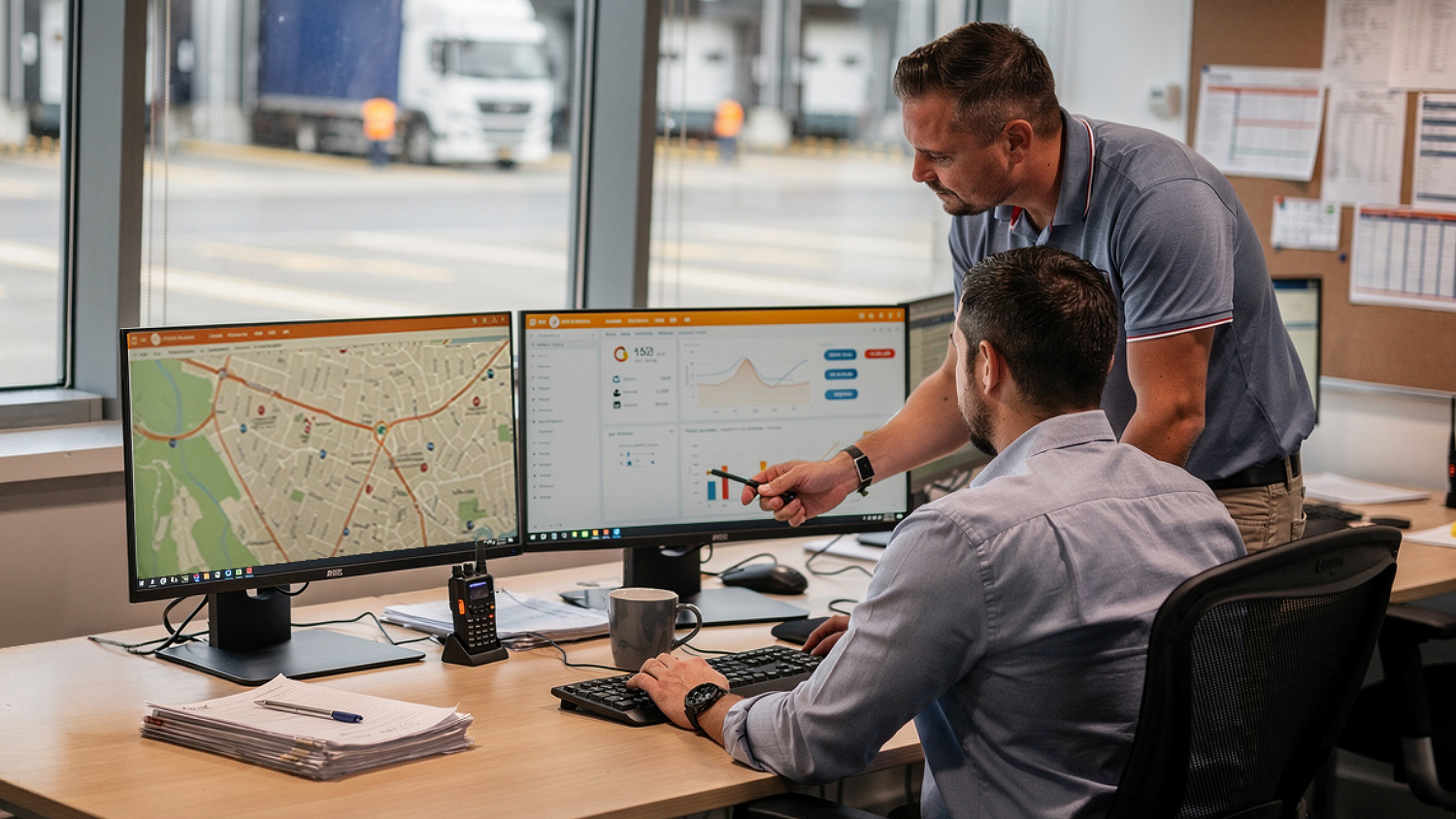
Delivery management software, often built around electronic proof of delivery (ePOD), gives logistics businesses a digital way to manage the delivery process and the information generated along the way.
Modern ePOD goes beyond simply replacing a signed paper delivery note. It can form a central part of how delivery activity is managed, giving businesses a more structured and connected approach to handling delivery information across their operation.
This guide looks at the role of ePOD as delivery management software, where it fits within a logistics operation and the key considerations when selecting and implementing a platform.
Delivery management software explained
Delivery management software is technology used to digitally manage and record delivery activity, giving logistics teams a more consistent way to control what happens once goods leave the depot.
Electronic proof of delivery (ePOD) is a core part of many delivery management platforms. Rather than treating proof of delivery as a final signature or document, modern ePOD software creates a digital record of the delivery as it happens. This can include delivery status, signatures, photographs, quantities, discrepancies and other information captured by the driver. Data Driven Logistics’ ePOD Flow supports this across deliveries, collections and returns, giving operators visibility across the full delivery lifecycle.
For UK logistics businesses, the value lies in replacing fragmented or paper-based information with a structured digital record that can be accessed by the people who need it. This gives transport and operations teams a clearer foundation for managing delivery activity without relying on paperwork being returned to the office.
What does delivery management software do?
Delivery management software brings key parts of the delivery process together in one digital system. Depending on the platform, this can include:
- Delivery execution:Gives drivers access to the information they need to complete each job and record delivery activity.
- Electronic proof of delivery:Captures signatures, photographs, quantities, discrepancies and delivery status digitally.
- Customer notifications:Keeps customers informed about delivery progress and outcomes.
- Back-office visibility:Gives transport and operations teams access to delivery information without relying on paperwork.
- Reporting:Provides delivery data that can be used to monitor activity, identify discrepancies and review performance.
- Planning and routing:Some platforms also support delivery planning and route management, while others integrate with existing TMS or planning systems.
The delivery management lifecycle
Delivery management software supports the journey from dispatch through to delivery, collection or return, creating a connected digital process rather than a series of separate tasks.
Delivery information is made available to the driver through a mobile application, with workflows guiding the steps required for each job. Depending on the operation, this can include signatures, photographs, barcode scans, quantity changes and discrepancy details. With ePOD Flow, these workflows can be configured by Data Driven Logistics around different customers, order types and operational requirements.
As each stage is completed, information can be sent back to the central platform in real time, giving operations teams visibility of delivery progress and a digital record of what happened without waiting for paperwork to return to the depot. ePOD Flow sends customer notifications and monitors your delivery, helping keep customers and internal teams informed as the delivery progresses.
Connecting delivery software with your existing systems
Delivery management software is most effective when it works alongside the systems already used across your operation. Rather than creating another standalone platform, ePOD can connect delivery activity with wider business processes and help information move more efficiently between teams.
For many logistics businesses, this means integrating with systems such as a Transport Management System (TMS), Warehouse Management System (WMS) or Enterprise Resource Planning (ERP) platform. Delivery orders can be passed into the ePOD system, while status updates, discrepancies and completed proof of delivery can be returned to the relevant back-office systems.
The exact integration will depend on your existing technology and processes, so it is important to understand what data needs to move between systems and how each platform will be used.
When delivery management software becomes necessary
Delivery management software becomes most valuable when the complexity of an operation starts to outgrow manual processes or disconnected systems.
Common signs include teams spending too much time chasing delivery updates, relying on paper records, dealing with repeated customer queries or struggling to get a clear view of what is happening across the delivery operation. For UK logistics businesses managing growing delivery volumes or increasingly complex customer requirements, these gaps can become harder to manage consistently.
At that point, ePOD can provide a more structured way to capture delivery information, improve visibility and reduce the administrative burden placed on transport and operations teams.
Choosing the right delivery management platform
The right delivery management platform should fit the way your operation works rather than forcing your processes into a fixed system.
When comparing ePOD software, look beyond the core feature list and consider how easily the platform can be configured, how well it integrates with your existing systems and whether it can adapt as customer or operational requirements change. Driver usability, reporting, support and access to development expertise should also form part of the decision.
For more complex logistics operations, flexibility is particularly important. A platform that can support different workflows by customer, order type or service level gives you more scope to manage changing requirements without replacing the system as your operation evolves.
| Criteria | What to assess | Questions to ask |
|---|---|---|
| Configurability | Whether workflows can reflect your operation. | Can processes be configured for different customers, order types or service levels? |
| Integrations | How the platform exchanges information with existing systems. | Can it connect with your TMS, WMS or ERP, and what data can move between them? |
| Driver usability | How easily drivers can complete required tasks. | Is the mobile workflow clear and practical for drivers in real delivery conditions? |
| Support model | What help is available during and after rollout. | Who supports the operation when issues arise or processes change? |
| Development capability | Whether the supplier can adapt the software as requirements evolve. | Does the supplier have developers who can make required changes? |
| Data ownership | How delivery information is stored accessed and controlled. | Who owns the data and how can it be accessed or exported? |
| Contract terms | The commercial commitment and terms of using the platform. | What are the contract length, renewal, cancellation and service terms? |
| Total cost | The full cost of adopting and operating the platform. | What implementation, configuration, licences, integrations and ongoing support costs apply? |
How much does delivery management software cost?
The cost of delivery management software depends on your operations and business requirements. Factors such as delivery volumes, number of users, functionality, integrations and configuration can all affect the overall cost, so it’s important to consider the total investment rather than simply comparing prices.
How is delivery management software implemented?
Implementation depends on your operations, existing systems and configuration requirements. It typically involves reviewing current processes, configuring workflows, integrating existing systems, preparing data and training drivers and office teams. The software should then be tested before rollout, with implementation timescales varying according to the complexity of the operation and its integration and training requirements.
Common implementation issues include underestimating training requirements, leaving integrations until late in the process and choosing software that cannot adapt as requirements change.
Why choose Data Driven Logistics?
Data Driven Logistics provides configurable delivery management software designed to fit your existing processes, customers and service requirements. With in-house development expertise, ePOD Flow can adapt as your operation evolves.
Want to see how ePOD Flow could work for your operation?
Explore ePOD Flow and book your demo
FAQs
What is delivery management software?
Delivery management software is technology used to digitally manage and record delivery activity. It can connect driver execution, electronic proof of delivery, customer updates and back-office delivery information into a more structured digital process.
What is the difference between delivery management software and ePOD?
ePOD is a core part of many delivery management platforms and focuses on creating a digital record of what happened during a delivery. Delivery management software can cover a wider set of activities around delivery execution, visibility, notifications and reporting.
How does delivery management software work with a TMS?
A delivery management platform can work alongside a Transport Management System by receiving delivery orders or relevant information and returning delivery status, discrepancies and completed proof of delivery. The exact boundary depends on the systems and processes used by the business.
Can delivery management software integrate with a WMS or ERP?
Yes, delivery management software can be integrated with wider systems such as a Warehouse Management System or Enterprise Resource Planning platform. The important consideration is which data needs to move between systems and how each system will be used.
How long does delivery management software take to implement?
Implementation timescales vary depending on the complexity of the operation, integrations, data requirements and training needed. A supplier should establish the scope and implementation plan before committing to a rollout timescale.
What should you look for when choosing delivery management software?
Assess configurability, integrations, driver usability, support, development capability, data ownership, contract terms and total cost. The platform should fit the way the operation works and be able to adapt as requirements change.

Enhance Fleet Safety and Efficiency with Our Advanced Camera Solutions
Data Driven’s advanced vehicle camera solutions are designed to take fleet safety, efficiency and compliance to the next level. By combining cutting-edge camera technology with […]
Read More →
Improve Performance and Enhance the Customer Experience with Our Delivery Management System
A Delivery Management System drives positive changes – improving performance, empowering drivers, optimising routes, and creating lasting impressions to elevate the customer experience. With a focus on […]
Read More →